Free tools to assess your owner dependencies, find your biggest continuity gaps, and take your next step toward a business that can keep operating when you can’t be the one doing everything.
One form covers everything on this page. Tick what would help, and your first step comes back to you by email. The waitlist is free and commits you to nothing.
The waitlist is a real mailing list, with an unsubscribe link in every send.
What you get back
Waitlist: one email to confirm, then one more when the next cohort opens. Nothing in between.
Starter Kit: a $99 workbook set, free with the waitlist. It is being finished now and goes out by email the day it is ready.
Anything else on the list: a reply from Dymond with a few questions and a time to talk. Scope and price depend on your business, so neither gets quoted blind.
Quickstart seats are $599, or $539 at the Ask-a-CPA member rate.
The question is rarely who does my job. It is more specific than that.
Who would know what needs to happen first?
Who could access the systems they need?
Who would contact your clients?
Who would know which deadlines are coming?
Who could keep cash, payroll, and bills moving?
Who has authority to make decisions?
What knowledge currently lives only in your head?
Could someone reasonably capable keep things moving without asking you a hundred questions?
You don’t need everything documented to start. You need to know what matters most.
The distinction that matters
Documentation isn’t the same thing as continuity. A document nobody can find, understand, or use isn’t much of a backup plan.
Start with a 3-minute reality check
Ten statements across the five areas where owner dependency usually bites. This isn’t a grade. It’s a flashlight.
Where you stand today
0out of 20
Well covered. You are further along than most owners. What follows is your thinnest area, not a failing grade.
Partly covered. The structure is there in places. One area is noticeably thinner than the rest, and that is where the next hour is best spent.
Thin in most places. Someone stepping in would be guessing about a lot of this. That is common, and it is fixable in a defined order.
Almost everything runs through you. Nearly nothing here could continue without you right now. Start with one area rather than trying to fix all five.
People and responsibilities0 of 4
Clients and work0 of 4
Systems and access0 of 4
Money and administration0 of 4
Communication and decisions0 of 4
Each area is scored out of 4. Your lowest one is what the next step below addresses.
Knowing the gap is the easy part. Almost every owner who reads a score like this agrees it matters and then does nothing for another year, because nothing on the calendar makes them. That is the whole reason the Quickstart is four dated sessions with other owners in the room, and not a workbook you mean to open.
Your biggest gap may be people and responsibilities
If the work stops when you stop, the first question is not who does your job. It is who is responsible for what, and whether that person knows it.
Do this next: Name one backup person for the three things only you do today, and tell them.
Don’t worry about yet: Cross-training your backup on everything you do.
Continuity Tabletop Exercise, $895. A facilitated simulation of an unexpected owner absence, from the first hour through day 30, to find the gaps documentation alone won’t show.
Your backup plan doesn’t need to be perfect. It needs to be usable.
Findable
People know where the information lives.
Understandable
A reasonably capable person can follow it.
Accessible
The right people can actually get what they need.
Actionable
It tells people what to do, not just what exists.
Tested
You’ve found what breaks before an emergency does.
Why Dymond
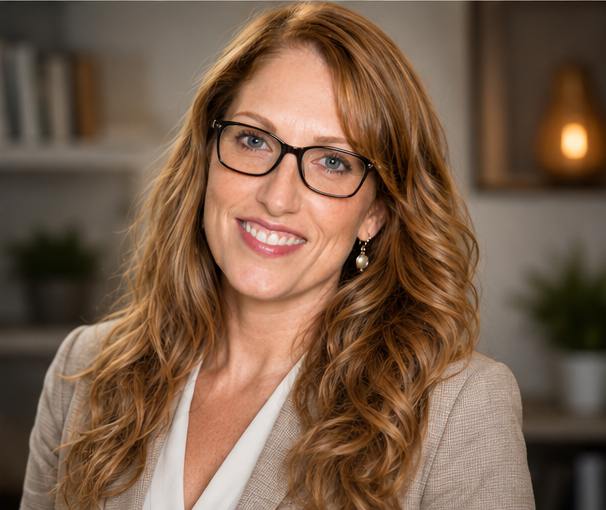
Jennifer Dymond, CPA is the founder of Spire Consulting Services. She brings 8 years of accounting firm experience and 15 years running her own consulting practice, helping business leaders improve processes, financial visibility, operations, and decision-making.
Her approach combines accounting and business experience with a practical focus on communication, systems, and making complex problems easier to act on.
The goal isn’t to make you anxious about everything that could go wrong. It’s to identify what matters most, create enough structure for someone else to step in, and build confidence that the business keeps moving when life doesn’t go to plan.
Certified Public Accountant, based in Portland, Oregon
15+ years in financial operations for owner-led firms